How to Reconcile UCI Corporate Travel Card
Reconciling Corporate Travel Card Expenses
Reconciling Corporate Travel Card expenses means ensuring that charges made on the Corporate Travel Card are correctly imported into KFS and charged to the right account. Unlike the CTS Ghost Card, Corporate Travel Card charges are not automatically posted to an account, they must be manually imported into a Travel Reimbursement (TR) eDoc. This guide walks you through the two most common credit reconciliation scenarios.
Corporate Travel Card charges are processed when you import them into a Travel Reimbursement (TR) eDoc in KFS. Once the TR is finalized, KFS sends a payment to USBank and posts the expenses to the account specified in the accounting lines.
Reconciling Corporate Travel Card Credits
The following scenarios explain how to handle Corporate Travel Card credits depending on whether the original expense has already been imported into a TR eDoc. Use the table below to find your situation, then follow the steps in the corresponding section.
| Scenario | Action Required |
|---|---|
| Credit received; original expense not yet imported | Import the credit, the original expense, and an additional expense together on the same TR eDoc |
| Credit received; original expense already imported | Wait for a new expense that exceeds the credit amount, then import both together on the same TR eDoc |
Scenario 1: Credit Received — Original Expense Not Yet Imported
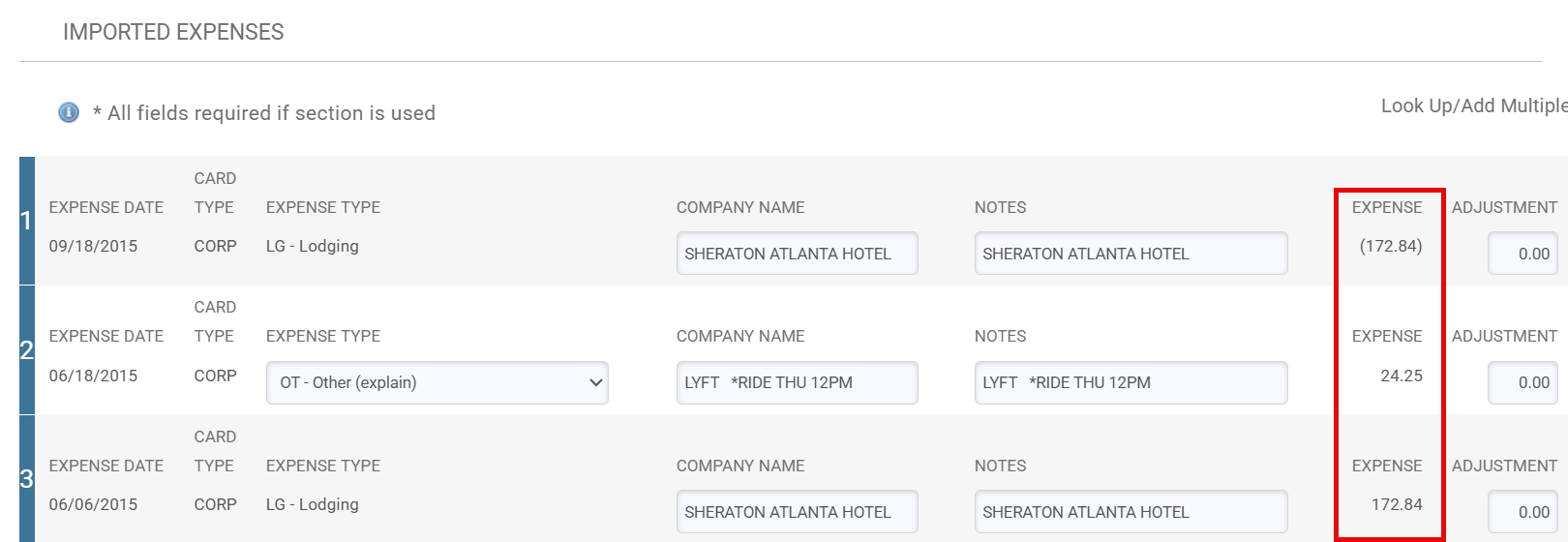
If the original expense has not yet been imported, you must import the credit, the original expense, and an additional expense together on the same TR eDoc. The total amount must be greater than zero. Follow the steps below:
Step 1: Import the credit, the original expense, and an additional expense together on the same TR eDoc, ensuring the total amount is greater than zero.
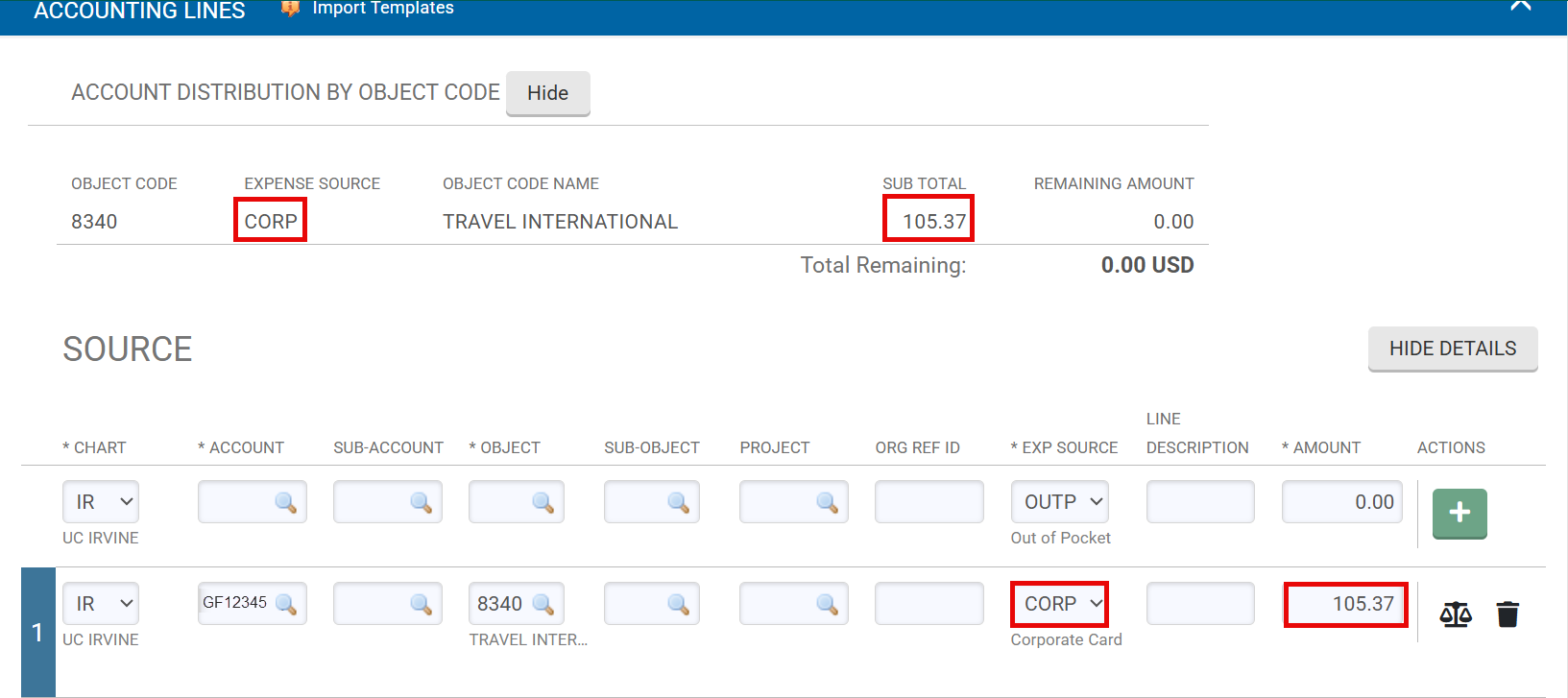
Step 2: In the Accounting Lines tab, set the Expense Source and Object Code to match the Account Distribution by Object Code section.
Step 3: Set the amount to reflect the actual expense owed to USBank.
Scenario 2: Credit Received — Original Expense Already Imported
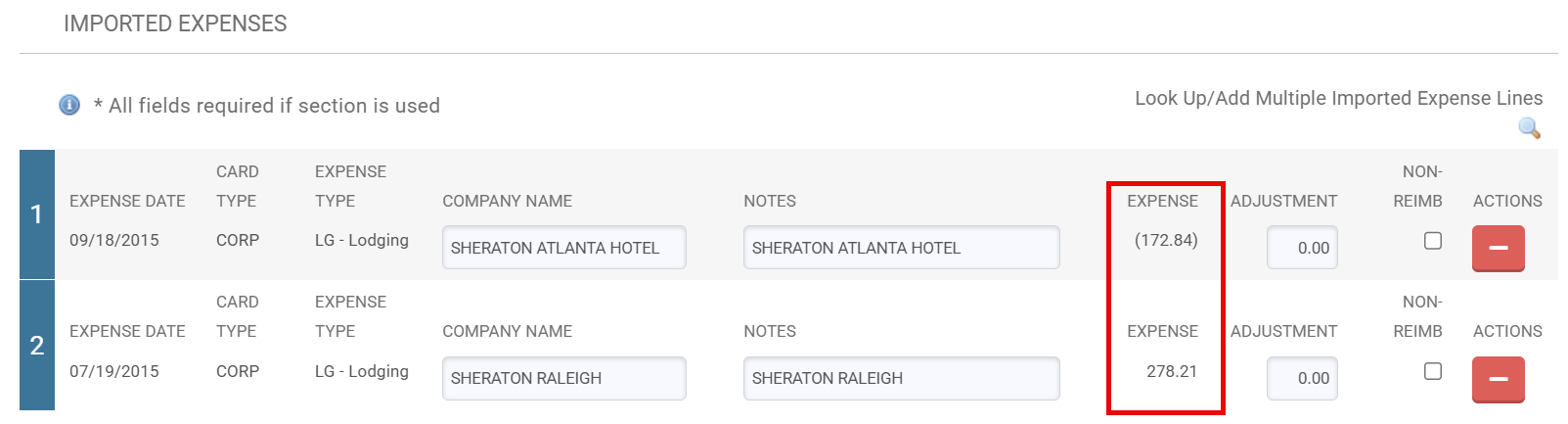
If the original expense has already been imported, you will need to wait until you have a new expense that exceeds the amount of the credit. Once you have this new expense, import both the credit and the new expense together on the same TR eDoc. Follow the steps below:
If you are unsure how long to wait or need assistance with an unreconciled credit, contact Travel Accounting at travel-accounting@uci.edu.
Step 1: Wait until you have a new expense that exceeds the amount of the credit.
Step 2: Import the credit and the new expense together on the same TR eDoc.
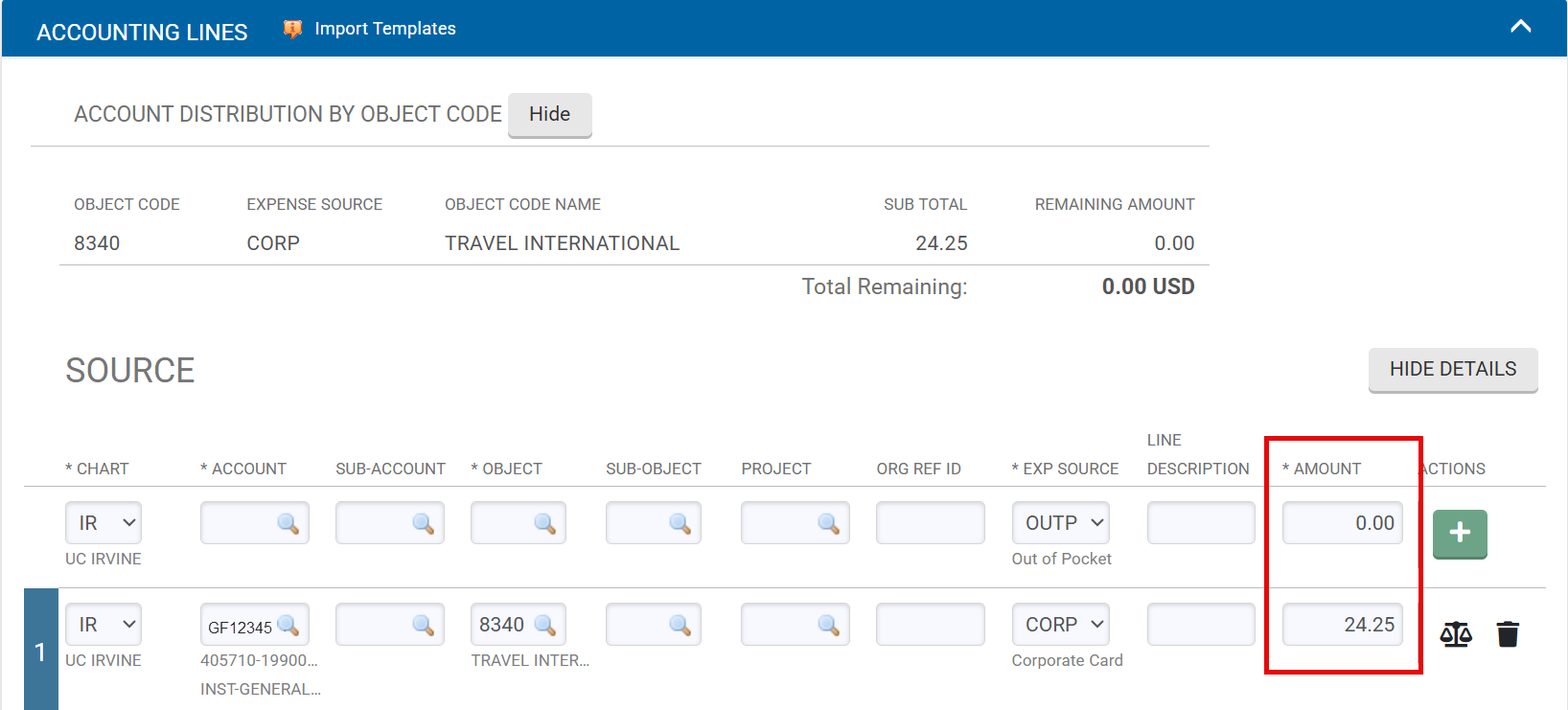
Step 3: Set the accounting line amount to reflect the actual expense owed to USBank after the credit is applied.